Proper Nouns for Kids: A Guide with Examples
A proper noun identifies one particular person, place, day, month, language, festival, book, or organisation, and it begins with a capital letter. Proper Nouns for Kids: A Guide with Examples explains how this rule differs from the rule for common nouns. Your child will see clear comparisons, useful word cards, short practice tasks, an answer key, and the mistakes that matter most. Younger children can begin by spotting familiar proper nouns. Older children can move on to titles, family words, and proper adjectives without learning a long list of terms.
📥 Proper Noun Power: Learn, Practise, and Track
A child-friendly guide with examples, activities, and a weekday tracker
Leave your email — we'll send the PDF to your inbox.No spam — the PDF plus one short reminder. Unsubscribe anytime.
What a Proper Noun Means
A common noun names a general group: girl, city, river, or month. A proper noun identifies one member of that group: Mei, Nairobi, the Nile, or October. The word proper means that the noun points to one specific person, place, or thing.
The aim of Proper Nouns for Kids: A Guide with Examples is to make that difference visible. Ask, “Is this any place, or one particular place?” In We visited a museum, museum is common. In We visited the British Museum, the full expression is proper.
Common Nouns and Proper Nouns
Children usually understand the rule faster when they compare words in pairs. The common noun tells us the type of person, place, or thing. The proper noun identifies one specific member. A proper noun may contain more than one word, as in South Africa or United Nations.
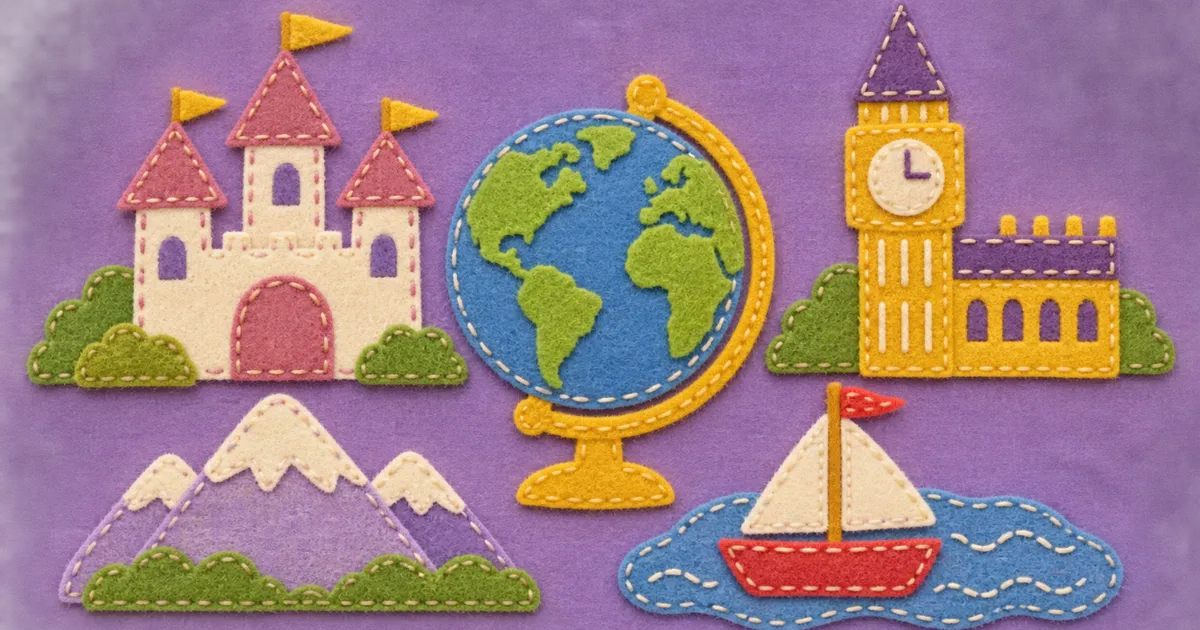
Use these cards for a quick sorting game. Your child can identify the type shown on each card, then suggest another proper noun from their own family, languages, calendar, or local area.
Mei
Nairobi
Brazil
Tuesday
Arabic
Diwali
Capital Letters and the Types Children Learn First
The main rule is simple: begin every proper noun with a capital letter, even when it appears in the middle of a sentence. Write We go on Friday, not We go on friday. Children can start with people, cities, countries, days, months, languages, festivals, schools, and familiar organisations.
Proper Nouns for Kids: A Guide with Examples also helps children notice multi-word proper-noun expressions. Capitalise the key words in Pacific Ocean and British Museum. For a book, film, school, or organisation, check the official spelling when unsure. This is safer than guessing which small words need capitals.
How to Teach the Rule at Home
Keep Proper Nouns for Kids: A Guide with Examples beside a short reading task. Ask your child to circle general words and underline specific terms. Then let them explain each choice. Across LearnLink lessons, our tutors can use the same pattern: spot the noun, decide whether it identifies one specific person or thing, and check the first letter.
Practice 1: Fix the Capital Letters
Rewrite these sentences correctly: 1) on monday, we visited the british museum in london. 2) the month of july follows june. 3) we speak spanish at home. 4) our school closes on friday. 5) they crossed the nile.
For younger children, read each sentence aloud before they write. For older children, ask for the reason as well as the correction. A correct answer with a clear reason shows that your child understands the rule rather than copying the shape of the sentence.
Practice 2: Common or Proper?
Write common or proper for each noun: 1) school 2) Mount Fuji 3) teacher 4) Arabic 5) Tuesday 6) ocean. Next, replace each common noun with a suitable proper noun.
Keep practice brief and regular. One sentence from a book, message, calendar, or family plan can be enough. Real examples show that capital letters carry meaning; they are not decorations added to make a word look important.
Common Mistakes, Quick Fixes, and Answers
Children may capitalise every noun, especially if another language uses capitals differently. Others may write days, months, or languages in lowercase because these words do not feel like identifying labels. Use one test: “Does this word name one specific person, place, time, language, work, or organisation?” If yes, check the capital.
Answer key for Practice 1:
- On Monday, we visited the British Museum in London.
- The month of July follows June.
- We speak Spanish at home.
- Our school closes on Friday.
- They crossed the Nile.
Answer key for Practice 2: school, teacher, and ocean are common nouns. Mount Fuji, Arabic, and Tuesday are proper nouns. Accept any suitable, correctly capitalised examples for the second step. Correct gently: point to the exact word, ask the test question, and let your child repair it.
When Children Are Ready for Harder Examples
Once the basic rule is secure, Proper Nouns for Kids: A Guide with Examples can support trickier contrasts. Compare my mum with Can you help me, Mum? The family word takes a capital when it is used in place of a name. Compare a northern town with an official region name such as Northern Ireland.
Older children can also learn proper adjectives. A word formed from a proper noun usually keeps its capital: Spain becomes Spanish, and Africa becomes African. School subjects are usually lowercase, as in maths or science, but languages such as English and French are capitalised.
- Choose five sentences from a favorite book and circle every proper noun.
- Ask your child to replace each common noun with a specific name.
- Sort ten examples into people, places, days, months, and titles.
- Compare two tricky sentences, then explain why each capital letter belongs.
- Write three original sentences using proper nouns from your child’s current reading.
For the rule wording, Wikipedia — English Grammar is a useful reference while the practice examples here stay adapted for children.
Frequently Asked Questions
At What Age Can a Child Learn Proper Nouns?
Children can begin once they recognise that people and places have names. Proper Nouns for Kids: A Guide with Examples works best when the examples come from your child’s own world: their name, home city, languages, days of the week, and familiar celebrations. Younger children can sort and say the words. Older children can explain the rule and edit full sentences.
Why Does My Child Capitalise Every Noun?
Your child may have noticed that proper nouns take capitals but may not yet separate a name from a general label. Put two words side by side, such as city and Paris. Ask which word could describe many places and which identifies one place. Repeat the contrast with people, months, languages, and organisations.
Do Seasons Begin with Capital Letters?
The names of seasons are usually common nouns, so write spring, summer, autumn, and winter in lowercase. Use a capital when the season begins a sentence or forms part of an official name or title. This makes seasons different from days and months, which always begin with capitals in English.
Does a Word Such as “Mum” or “Dad” Need a Capital?
Use a capital when the family word replaces a person’s name: I asked Mum or Thank you, Dad. Use lowercase when a possessive word comes before it: my mum or your dad. Ask whether the word is acting as a name. That test is clearer than trying to memorise each sentence.
How Much Practice Does a Child Need?
Use this three-step routine for five minutes a day: first, choose one sentence from a book, calendar, map, or school message; second, ask your child to find the proper noun and explain its capital; third, repeat with two new sentences. Return to the routine on three different days. If errors continue, reduce the task to one contrast, such as country and Italy.
If your child needs steady speaking practice, start small — choose a trial lesson.
Stay updated on our latest tips and resources by following us on Instagram LearnLink.